Should I Repair or Replace My Car?
The average age of cars on UK roads is now at a record high of almost 10 years old, according to the RAC Foundation. With many drivers deciding to keep their vehicle for longer, unexpected repair bills are becoming an increasing reality.
But when something goes wrong, how do you know whether it is worth repairing your car of replacing it all together? From the cost of the repair to your car’s age, reliability and value, here are the key factors to consider before making your decision.
How much is it worth?
The big question when your faced with a large repair bill is simple: how much is your car worth today?
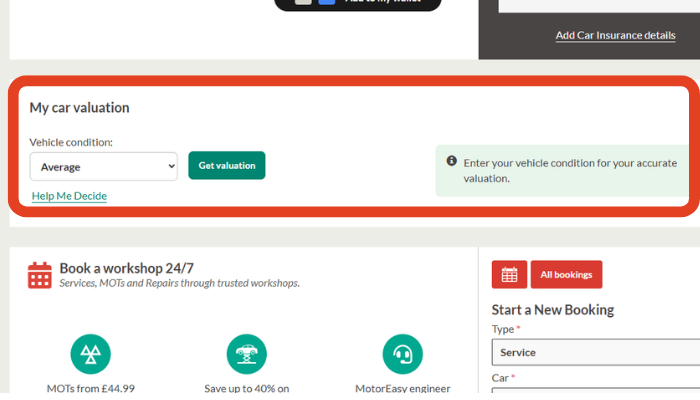
If you’re unsure login to your Digital Garage account and use our free car valuation tool:
When choosing it's condition consider:
For condition consider:
- Service history
- Number of owners
- Major mechanical repairs
- Any modifications
Once you have the valuation you can then compare it to the repair bill.
If the repair bill to put your car right is more than what your car is worth, it’s almost always better to move on. Repairing a car for more money than it’s worth does not make financial sense.
What is your car’s track record?
The next question to ask is: how reliable has your car been so far?
Have you owned if for years with few problems?
If it’s a dependable runaround and has a reputation for reliability it may be worth repairing, depending on the severity of the issue. However, if its let you down on more than one occasion, it could be a warning sign of a potential money pit.
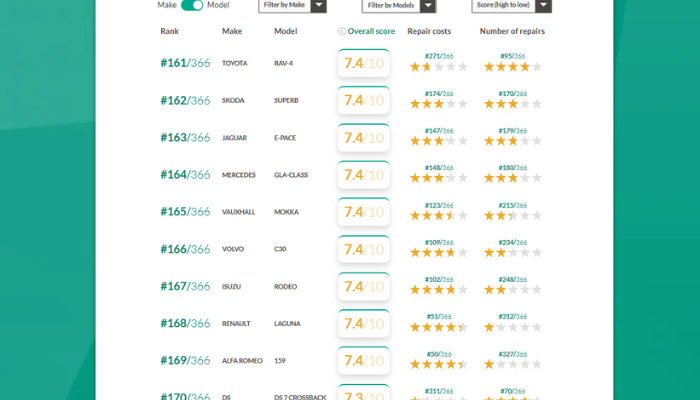
Unsure about your car’s future reliability? Check the MotorEasy reliability index, it ranks cars under MotorEasy warranty cover based on how frequently faults occur and how expensive they are to fix.
If your car ranks well, it may be worth holding onto. If it ranks poorly, a major repair bill could be the sign you need to start looking elsewhere or safeguard yourself with a Warranty.
What is your car’s track record?
The next question to ask is: how reliable has your car been so far?
Have you owned if for years with few problems?
If it’s a dependable runaround and has a reputation for reliability it may be worth repairing, depending on the severity of the issue. However, if its let you down on more than one occasion, it could be a warning sign of a potential money pit.
Unsure about your car’s future reliability? Check the MotorEasy reliability index, it ranks cars under MotorEasy warranty cover based on how frequently faults occur and how expensive they are to fix.
If your car ranks well, it may be worth holding onto. If it ranks poorly, a major repair bill could be the sign you need to start looking elsewhere or safeguard yourself with a Warranty.
Does your car still suit your lifestyle?
Another factor to consider is whether your car still fits your current needs.
Maybe it is an older diesel that you originally bought to cover long motorway journeys, but since switching to working from home, it now spends most of its time doing short local trips.
That change in use can have an impact. Diesel cars are not always well suited to repeated short journeys, as components such as the DPF need longer runs to work properly. Likewise, cars used infrequently can suffer from battery issues, seized brakes and other problems caused by lack of use.
So before committing to a repair, ask yourself: would you still choose the same vehicle today?
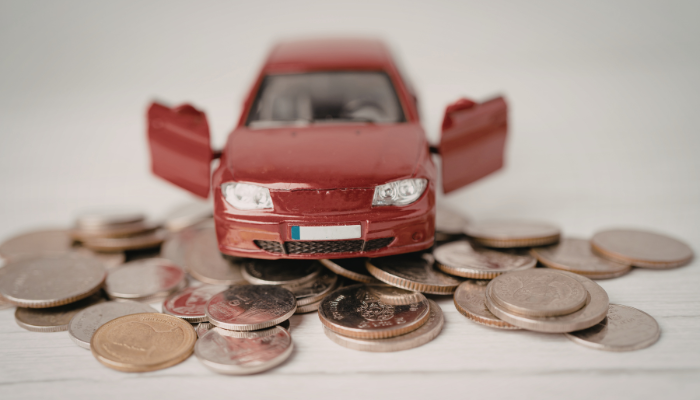
What could go wrong next?
As most cars age and gain mileage, the risk of repairs increases. Original parts start to wear, rubber components perish and any gaps in maintenance can begin to show.
One of the most common times drivers uncover potential problems is during its annual MOT test.
An MOT is your cars annual safety check, it looks at key areas including brakes, tyres, steering and suspension.
The problem, however, comes if your car fails its MOT test. According to DVSA data, just over 27% of MOT tests are initially failed, meaning more than one in four vehicles do not pass first time.
Once a car has failed its MOT, it cannot be driven on public roads unless it is being taken to a pre-booked repair appointment or MOT retest, and it must still be roadworthy. Depending on the severity of the failure, that could mean multiple fixes and a much higher repair bill than expected.
Office for National Statistics data has shown that the cost of vehicle maintenance has increased by 7.2% in the last year (ONS). More than double the rate of normal inflation making this harder for drivers to absorb (3%, ONS).
The best way to reduce your risk, is to prepare your car by carrying out any required maintenance ahead of time.
It is also important to choose a test centre with a good reputation, like one of MotorEasy 10,000 approved garages.
Lastly, if your vehicle passes it’s MOT but with 1 or 2 advisory conditions keep an eye on them over the next few months. Consider getting your car checked after the next couple thousand miles. Being cautious and staying on top of your vehicles needs is almost always better than waiting for something to go wrong.
Planning for the Unexpected
Even a well-maintained car can suffer sudden mechanical or electrical failures.
Here at MotorEasy, we specialise in Extended Warranty cover that protects drivers from sudden mechanical and electrical failures, including eligible faults found at MOT or service.
Our plans are tailored to your vehicle’s age and mileage, with claims covered up to the value of your vehicle. Repairs are managed through our approved garage network, helping you get back on the road with less stress.
How expensive can car repairs get?
Repair costs can vary widely depending on the vehicle, fault and labour involved. Smaller repairs may cost a few hundred pounds, while major mechanical or electrical failures can quickly run into the thousands.
Typical repair costs: 2026
| Part | Cost |
| Engine Rebuild | £8,321 |
| Drive Shaft | £4,286 |
| Electric Issues | £3,707 |
| Exhaust | £3,406 |
| Differentials | £2,243 |
| Air Conditioning | £1,880 |
| Steering | £1,751 |
| Fuel System | £1,719 |
| Gearbox | £1,641 |
| Turbo | £1,554 |
| Suspension | £1,123 |
| Shock Absorbers | £1,054 |
Repair Decision Matrix
To help you decide whether it’s worth replacing or repairing your car we’ve created this useful guide to help you with your decision:
| Repair Costs vs Cars Value | Car Age | Recommendation |
| Under 20% | Any Age | Repair - Get a quote |
| 20-50% | Over 10 years-old, high mileage/recurring issues | Usually replace |
| Over 50% | Any age | Usually replace |
| Over 100% | Any age | Replace unless there's a special reason to keep |
Final Thoughts
There is no single answer to whether you should repair or replace your car.
The right decision depends on the repair cost, the value of your car, how reliable it has been and what it is likely to cost you next.
If the repair is affordable, the car has been dependable and it still suits your lifestyle, repairing it may be the sensible choice.
But if the repair bill is high and there is high chance of more repair cost round the corner consider covering yourself with a Warranty or replacing it in the long run.
FAQs
How do I know if my car is worth repairing?
Start by comparing the repair cost with your car’s current value. If the repair is relatively small and the car has been reliable, it may be worth fixing. If the repair costs more than the cars value, or the car has repeated issues, replacing it may make more financial sense.
You should also consider the car’s mileage, MOT history, service record and how well it still fits your lifestyle.
When is a car not worth repairing?
A car is usually not worth repairing when the repair bill is more than the vehicle’s current market value. It may also be time to move on if the car is high mileage, regularly failing its MOT or needing repeated repairs.
One large repair bill can sometimes be manageable, but several repair bills close together can be a sign the car is becoming a money pit without a robust warranty in place.
Should I repair my car after a failed MOT?
It really depends on what caused it to fail. Small issues such as bulbs, tyres, wipers or brake pads are worth fixing. But if your MOT failure includes major suspension, emissions, corrosion or braking issues, you should compare the repair cost with the value of the car before deciding.
If your car passes with advisories, do not ignore them. They are early warning signs and may become more expensive problems later.